%20%5BRecovered%5D-04.svg)


When producing large exterior or illuminated signage, choosing the right flex face material can affect durability, appearance, consistency, and overall project cost.
At Payler, we offer two primary flex face options: 20 oz Flex Face and 3M™ Panagraphics™ III.
Both are dependable materials designed for large-format and backlit signage. The right choice depends on the scope of the project, expected service life, brand requirements, and whether the program requires additional testing, documentation, or warranty support.
1. What Is Flex Face?
Flex face is a durable, flexible sign material designed to be tensioned across a frame or sign cabinet rather than installed as a rigid panel.
Because it can span large areas while remaining lightweight and flexible, flex face material is commonly used for:
- Illuminated sign cabinets
- Pylon and monument signs
- Storefront signage
- Retail signage
- Large exterior signs
- Oversized backlit graphics
For illuminated applications, a translucent flex face allows light from inside the cabinet to pass through the printed graphic, creating a highly visible sign during both the day and night.
Unlike traditional banner material, flex face is specifically designed for tensioned sign systems and long-term exterior applications.
2. What Is 20 oz Flex Face, and When Do We Recommend It?
Payler's 20 oz Flex Face is a professional-grade reinforced substrate designed for large exterior and illuminated signage.
It offers a strong combination of durability, print quality, and value, making it a dependable choice when a project does not require a specific branded substrate or manufacturer-backed system.
We often recommend 20 oz Flex Face for:
- Individual sign projects
- Regional sign programs
- Retail and storefront signage
- Automotive and dealership signage
- Monument and pylon signs
- Large illuminated sign cabinets
For sign shops looking for reliable performance without the added cost of a premium branded material, 20 oz Flex Face can provide everything the application needs.
3. What Is 3M™ Panagraphics™ III, and When Do We Recommend It?
3M™ Panagraphics™ III is a premium flexible substrate designed for large-format and internally illuminated signage.
Its basic application is similar to other professional-grade flex face materials, but one of its biggest advantages is the broader system behind the product.
3M provides extensive product testing, technical documentation, standardized material specifications, and warranty options for qualifying applications.
We generally recommend Panagraphics III for:
- National sign rollouts
- Multi-location programs
- Large brand rebrands
- Projects with strict material specifications
- Programs where long-term consistency is especially important
- Applications where manufacturer documentation or warranty options are a priority
For a national program, the cost of replacing a failed sign extends far beyond the printed face. Freight, installers, lifts, permits, and site coordination can quickly make a replacement expensive.
That additional predictability is one of the primary reasons Payler recommends 3M™ Panagraphics™ III for national sign programs.
4. What Is the Difference Between 20 oz Flex Face and 3M™ Panagraphics™ III?
The two materials are more similar than they are different.
Both are professional-grade flex face materials suitable for large exterior signs, illuminated cabinets, and demanding outdoor applications.
The biggest difference is the system behind the material.
Payler's 20 oz Flex Face provides a strong balance of durability, print quality, and cost. For many individual signs and regional programs, it is an excellent solution.
3M™ Panagraphics™ III offers similar core flex face capabilities but adds extensive manufacturer testing, technical documentation, standardized specifications, and warranty options.
Those differences become increasingly important as a project grows.
For a single sign or smaller regional program, our 20 oz Flex Face may provide the best balance of performance and budget.
For a national rollout involving dozens or hundreds of locations where signs may need to remain consistent across different regions and be reproduced years later, Panagraphics III provides an additional level of predictability that makes it our preferred option.
The goal isn't simply to choose the more expensive flex face material. It's to choose the material that makes the most sense for the scale and requirements of the project.
5. Flex Face Material Is Only One Part of the Finished Sign
Choosing the right substrate is important, but the flex face material itself is only one part of producing a successful finished sign.
Print technology, color management, ink layering, protective finishing, and production capabilities can all influence how a flex face performs and looks once installed.
This becomes especially important with backlit flex face signs, where the graphic needs to perform under two very different conditions: reflected daylight and illumination from inside the sign cabinet.
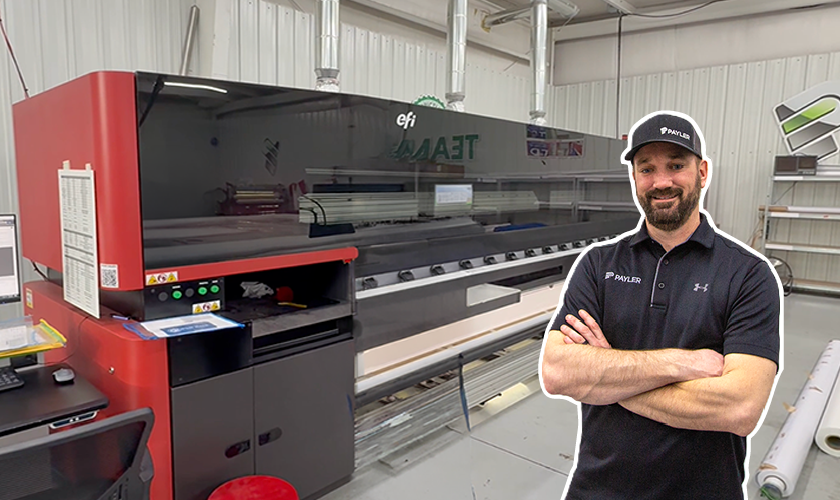
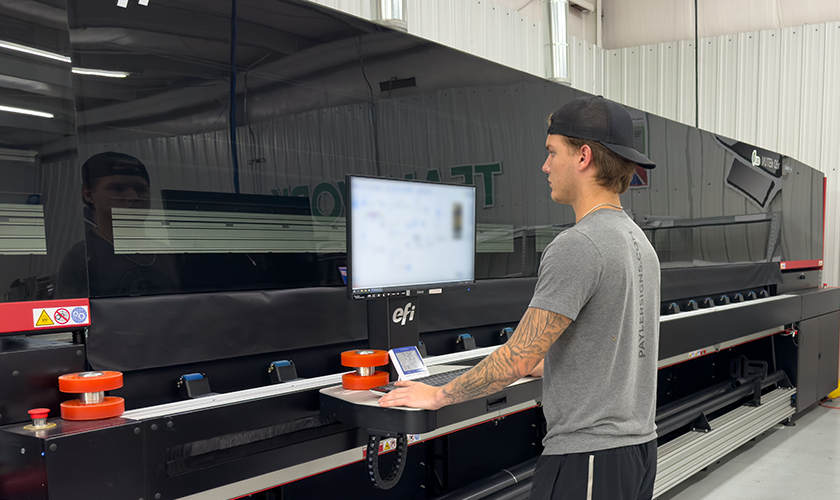
Payler's EFI VUTEk Q5r allows us to produce superwide flex face graphics and use multilayer printing techniques designed for demanding backlit applications. Combined with G7+ certified color processes and protective finishing options, this gives our team greater control over consistency, illumination, and the finished appearance of the sign.
Learn more about Payler's superwide and backlit printing capabilities with the EFI VUTEk Q5r.
Whether you're producing a single oversized sign face or coordinating a national rollout, the best solution comes from looking at the entire application, not just the material name.
Have a flex face project coming up? Send us your specs and our team can help determine the right material and production approach for the job.